50 CTA Button Examples for Online Stores and Popups
50 CTA button texts for online stores and popups, grouped by the shopper's moment, plus what makes a button worth clicking.
How gamified popups work, when to use a spin-to-win wheel or a scratch card, how to set prizes and odds, and 12 examples from online stores.
In short
Gamified popups get more email signups because visitors play for a prize instead of just filling in a form. Use a spin-to-win wheel to show the prizes or a scratch card to build curiosity, make small prizes common, create one code per prize, and show it once to new visitors.
Most visitors close a signup form without reading it. Put a wheel to spin in front of them instead, and the same email field becomes the price of a game they want to play.
A gamified popup turns a signup form into a quick game. The two most common are the spin-to-win wheel and the scratch card: the visitor enters an email, plays, and wins a prize such as 10% off or free shipping. They work best for first-time visitors and limited-time offers.
Below: how the two formats differ, how to set prizes and odds, when to show them, and 12 examples from online stores.
A gamified popup is a popup with a small game inside. The visitor gives an email address (or phone number) for the chance to play, and every play ends with a prize they can use at checkout. Marketers also call it popup gamification.
The best-known version is the spin the wheel popup, also called a lucky wheel or spin-to-win popup. The other is the scratch card, where the visitor scratches a digital card to reveal a hidden prize.
In OptiMonk, gamification means these two formats: the lucky wheel and scratch cards.
To add a spin-to-win popup to your online store, use a popup tool with a lucky wheel, set the prizes and how likely each one is, and ask for an email before the spin. Show it to first-time visitors after a few seconds or when they're about to leave, and only once per visitor.
Use a wheel when you want visitors to see what they could win. Use a scratch card when you want curiosity to do the work.
| Format | How it works | Best for | Prize tip |
|---|---|---|---|
| Spin-to-win wheel | The visitor enters an email and spins. The wheel stops on one of the prizes shown on its slices. | First-time visitors, welcome offers, exit intent. The visible prizes make the offer clear before the visitor commits. | Show 3 to 6 different prizes, repeated around the wheel. Every slice should win something. |
| Scratch card | The visitor scratches a card to reveal one hidden prize, then enters an email to get the code. | Seasonal sales, surprise offers, cart savers. The hidden reward makes people curious. | One reveal per card. Say in the headline what kind of prize is behind it ("your summer discount"). |
Both work on desktop and mobile, and both can use the same prizes. If you can't decide, build both and A/B test them against each other.
Gamified popups convert because they ask for the same email as a regular popup but give the visitor something to do. Three things help:
Across OptiMonk campaigns, lucky wheels have a 13.23% average conversion rate, higher than the other email popup types we measured (popup statistics).
Good prizes are ones your margin can afford and your shoppers actually want. Start with these rules:
In OptiMonk, each prize has a weight from 1 to 99 that sets how often it comes up, and the chance of each prize is calculated for you. A weight of 0 switches that prize off.
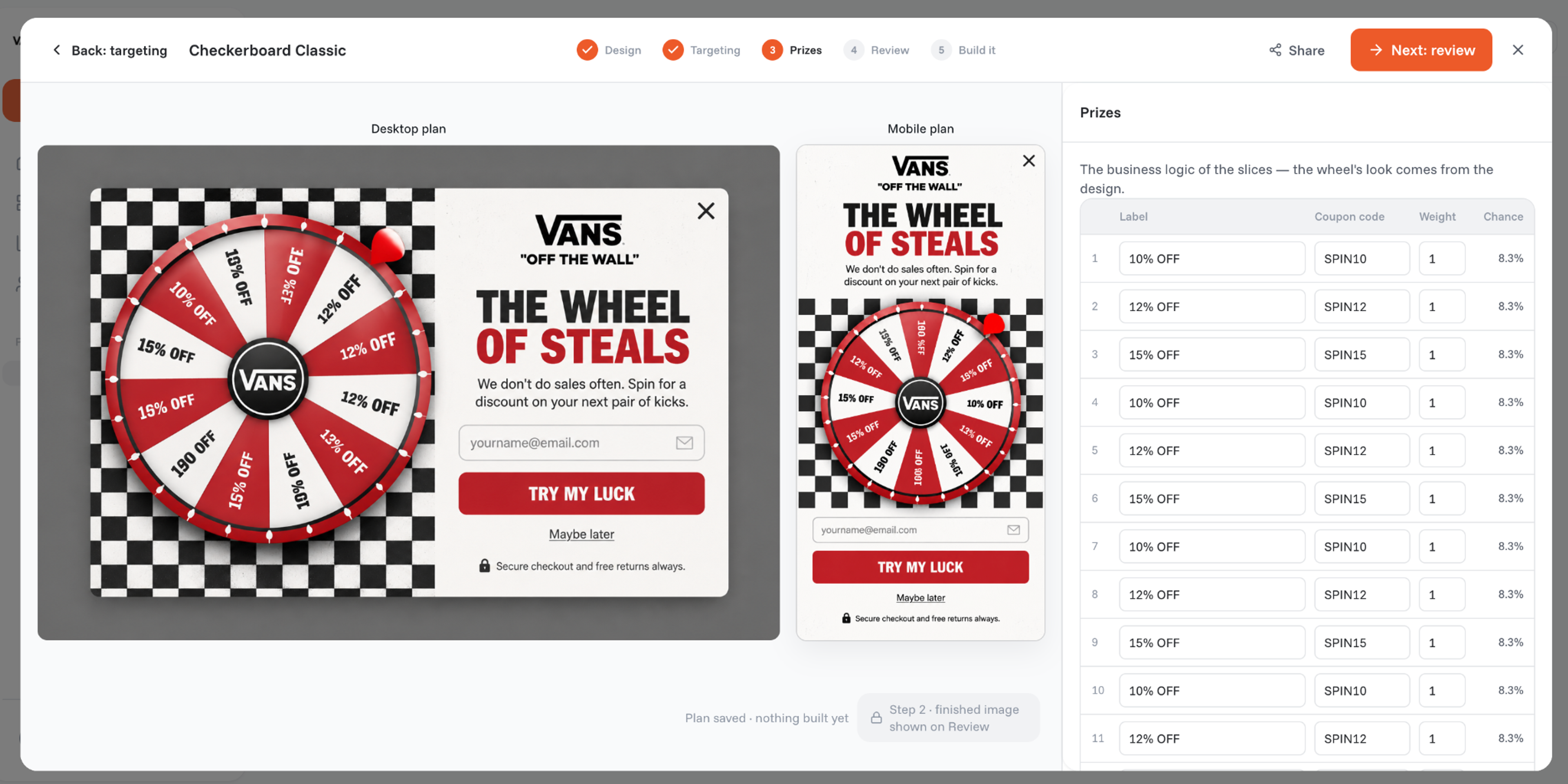
Not every prize has to be a discount. Free shipping, a free sample or a gift with the order can cost less than a percentage off and still feel like a win.
Show a gamified popup to new visitors, once, at a moment when they're still deciding. The usual setups:
Whichever trigger you use, set a frequency limit (once per visitor) and exclude people who have already subscribed. A visitor who sees the wheel on every page stops seeing it as a game.
The first two are spin the wheel popups from OptiMonk customers. The other ten come from the OptiMonk Popup Library: each was designed by the OptiMonk agent for a real store's brand, and you can open it and build your own version.

MotionGrey's wheel mixes percentage discounts (5%, 10% and 20%), a fixed $20 off and free shipping. Mixing prize types makes every spin feel different, and free shipping is a prize shoppers value even when the discount is small.

PatchPanel shows its wheel on exit intent, with discounts from 5% to 50%. The wheel only appears to visitors who are about to leave, so it reaches people the store would otherwise lose. A 50% prize works here only with a small weight.
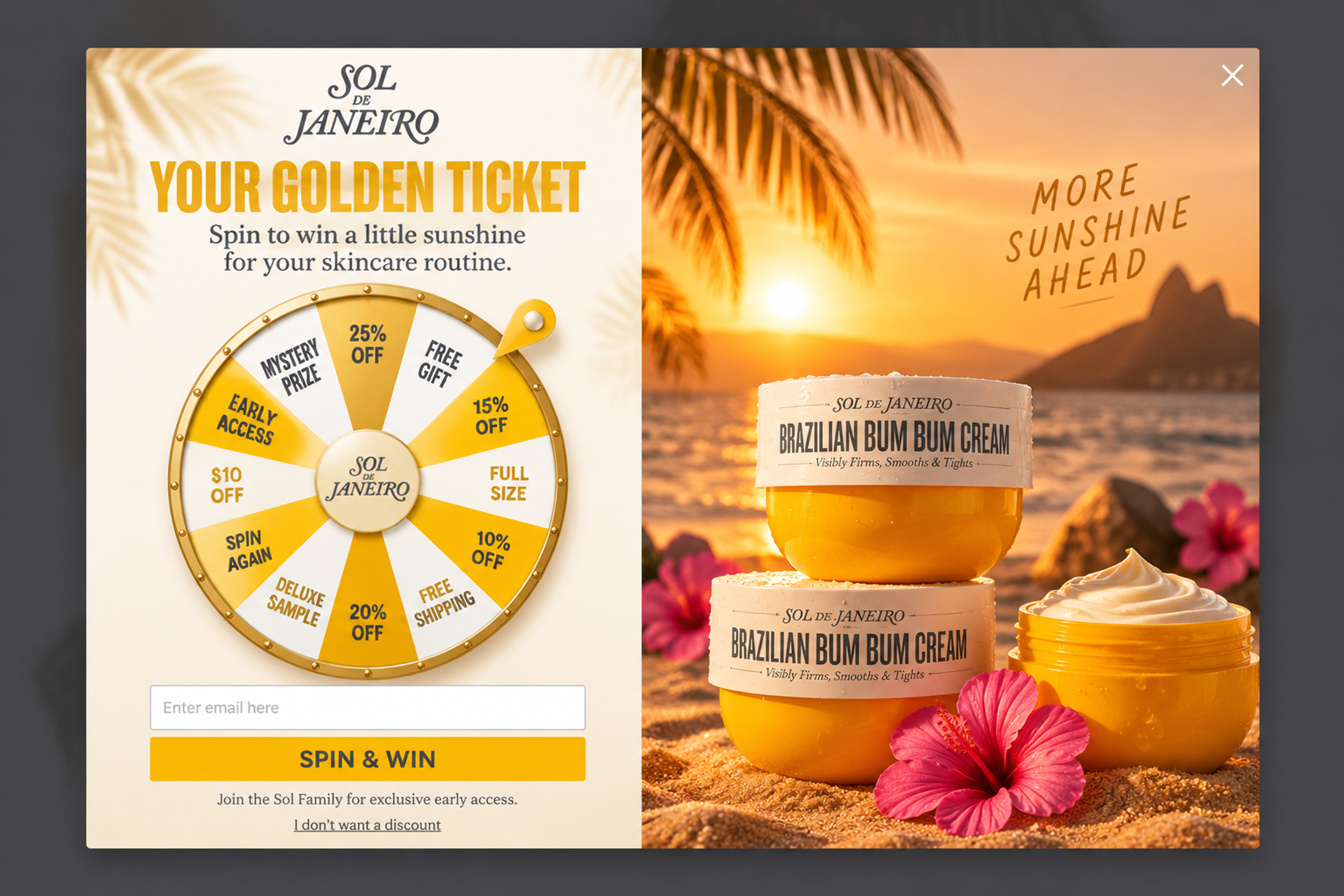
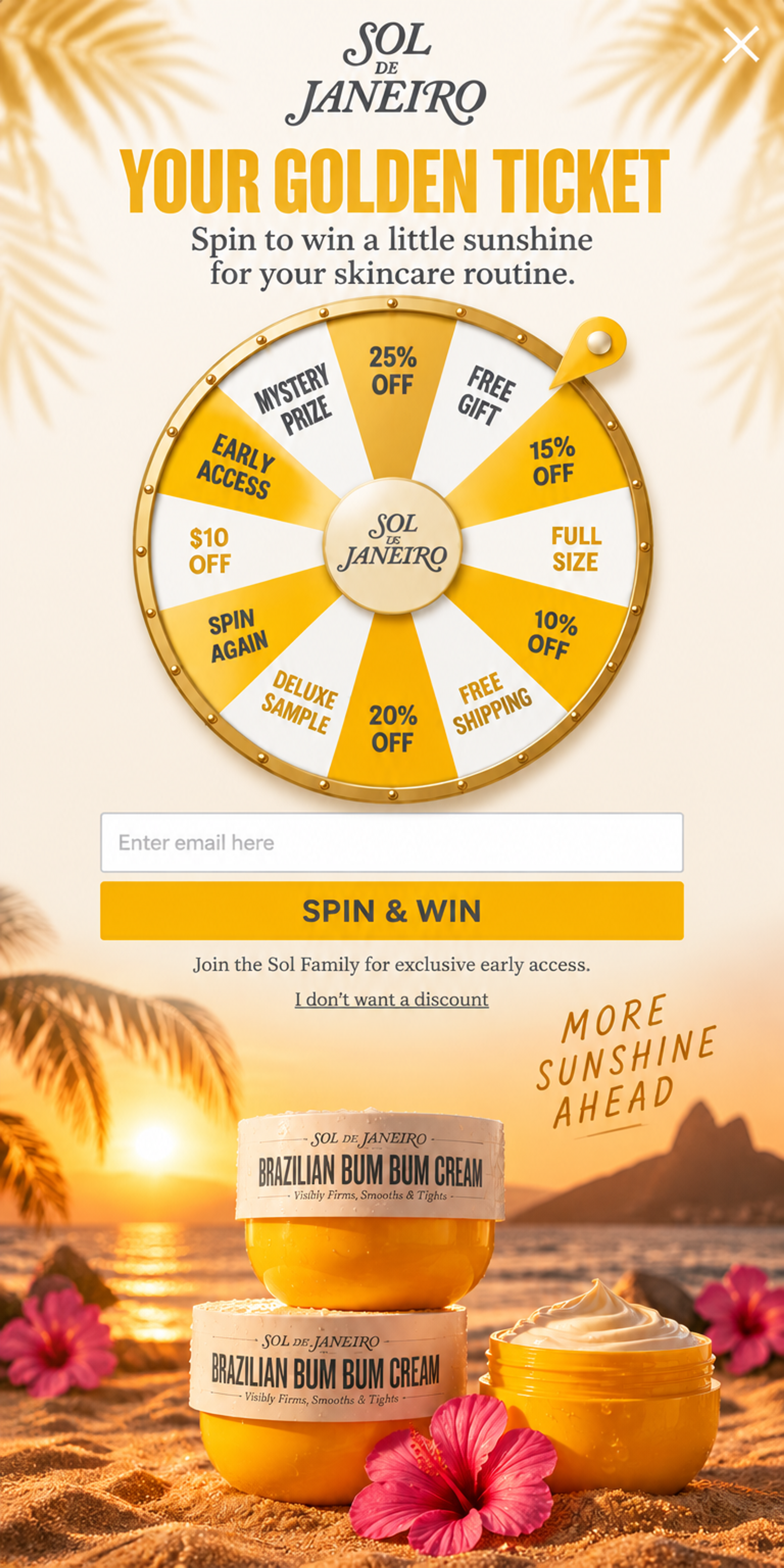
An evergreen wheel: "Your golden ticket. Spin to win a little sunshine for your skincare routine." The wheel sits next to a product photo, so the prize and the product are seen together. See this popup
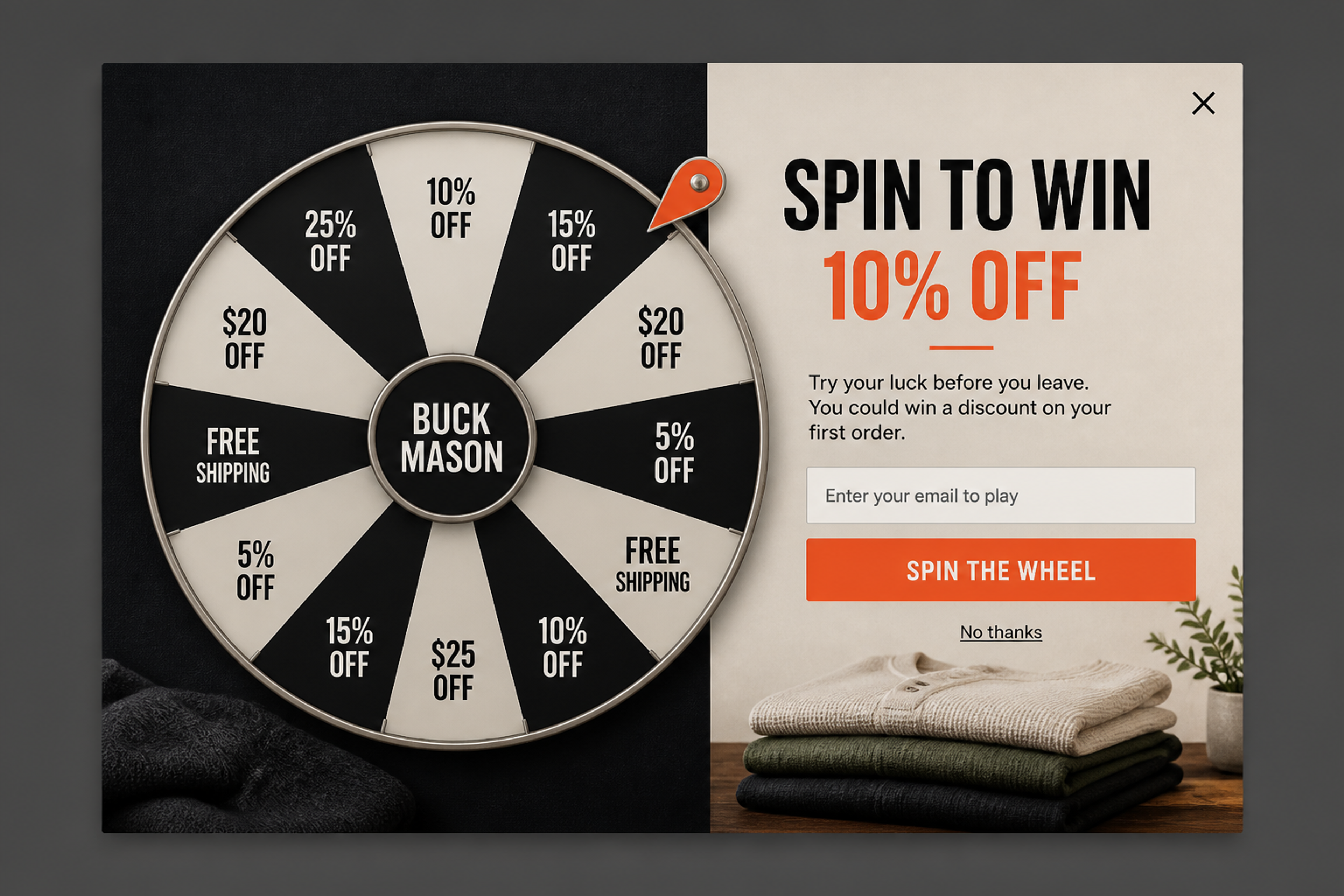
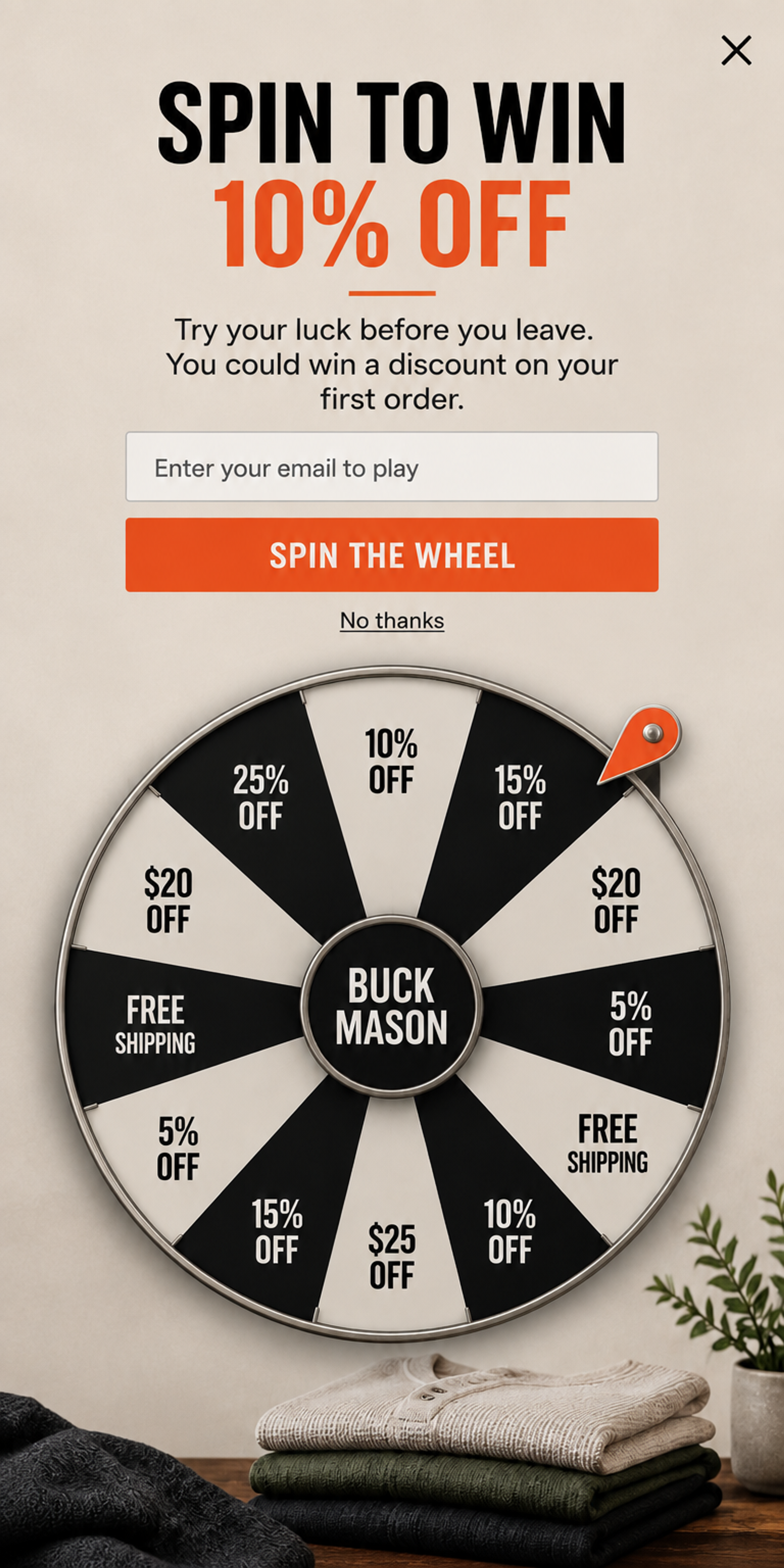
Built for exit intent: "Try your luck before you leave", with a discount on the first order. The wheel uses the brand's own colors, so it looks like part of the store, not a third-party game. See this popup
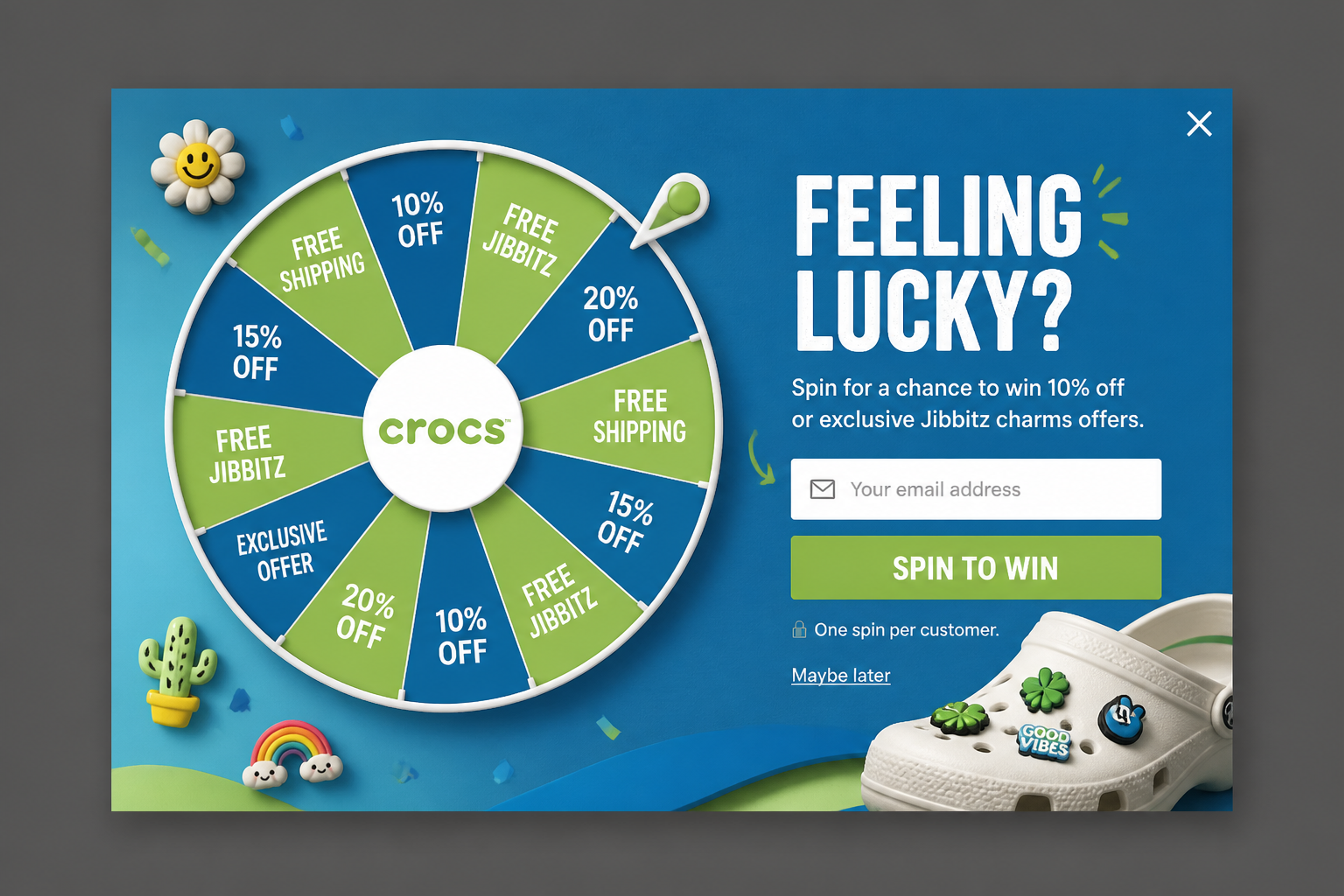
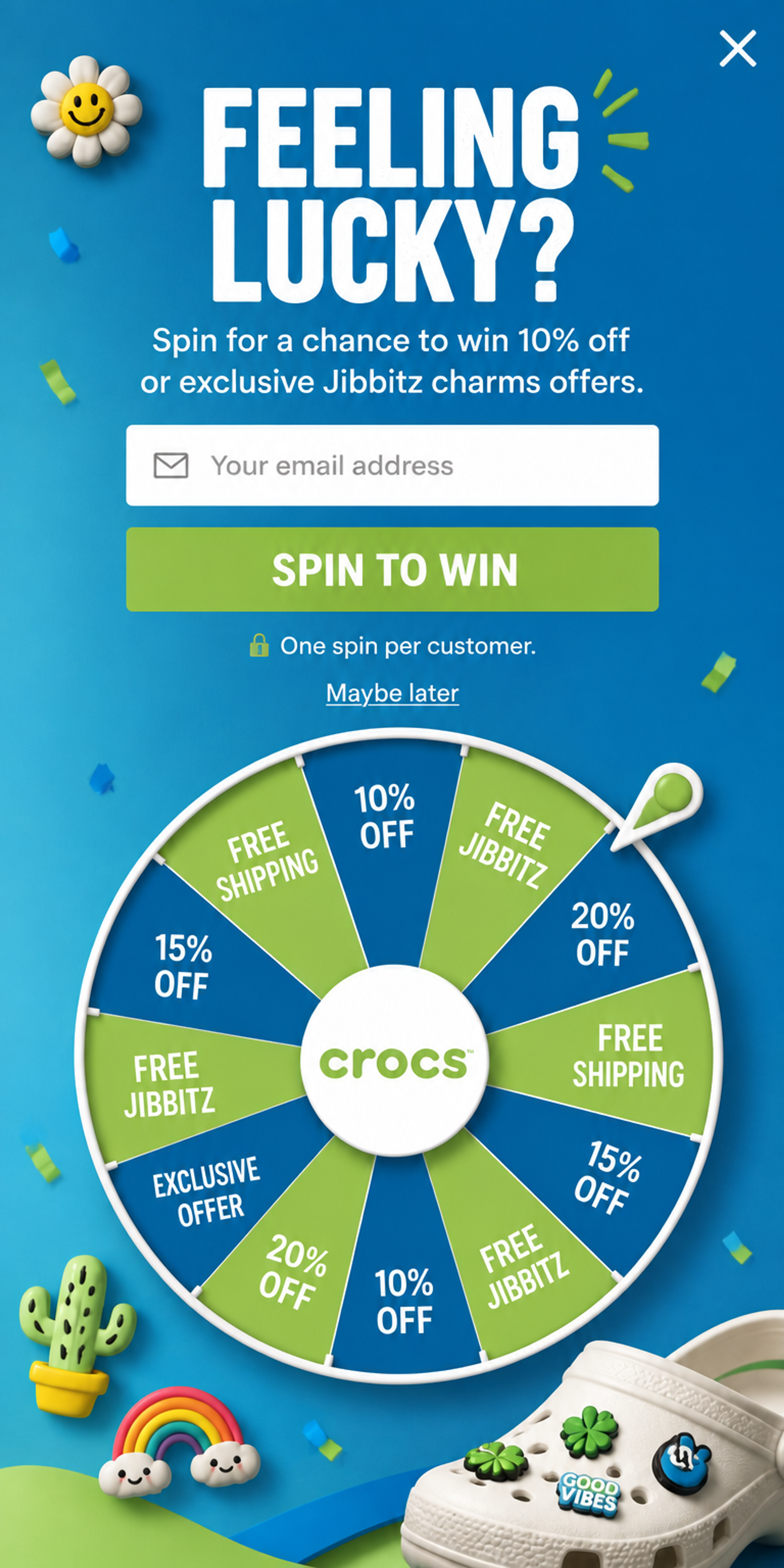
"Feeling lucky?" with a chance to win 10% off or a Jibbitz charms offer. A product prize next to a discount gives fans of the brand something they want, and "One spin per customer" sets the rule up front. See this popup
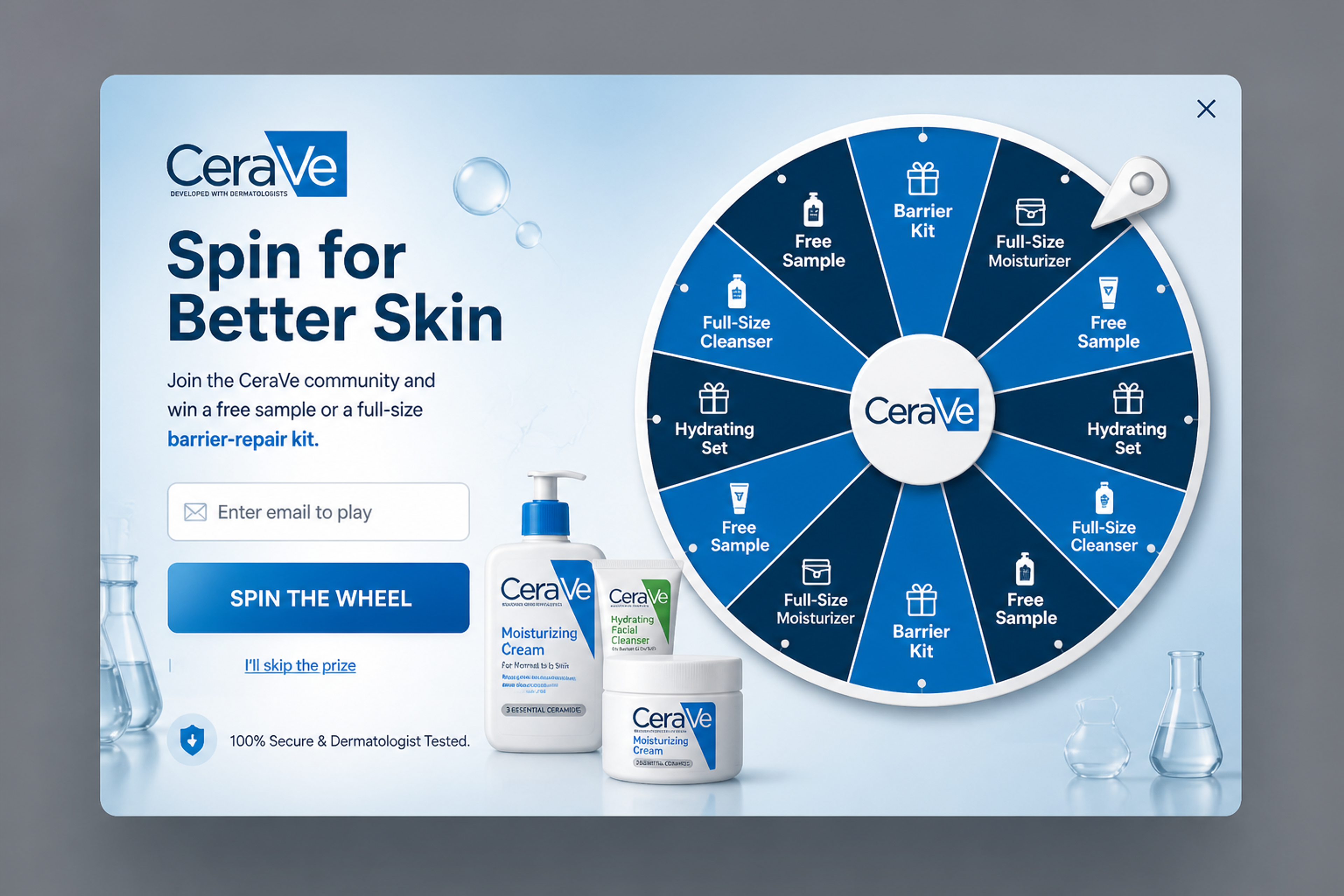
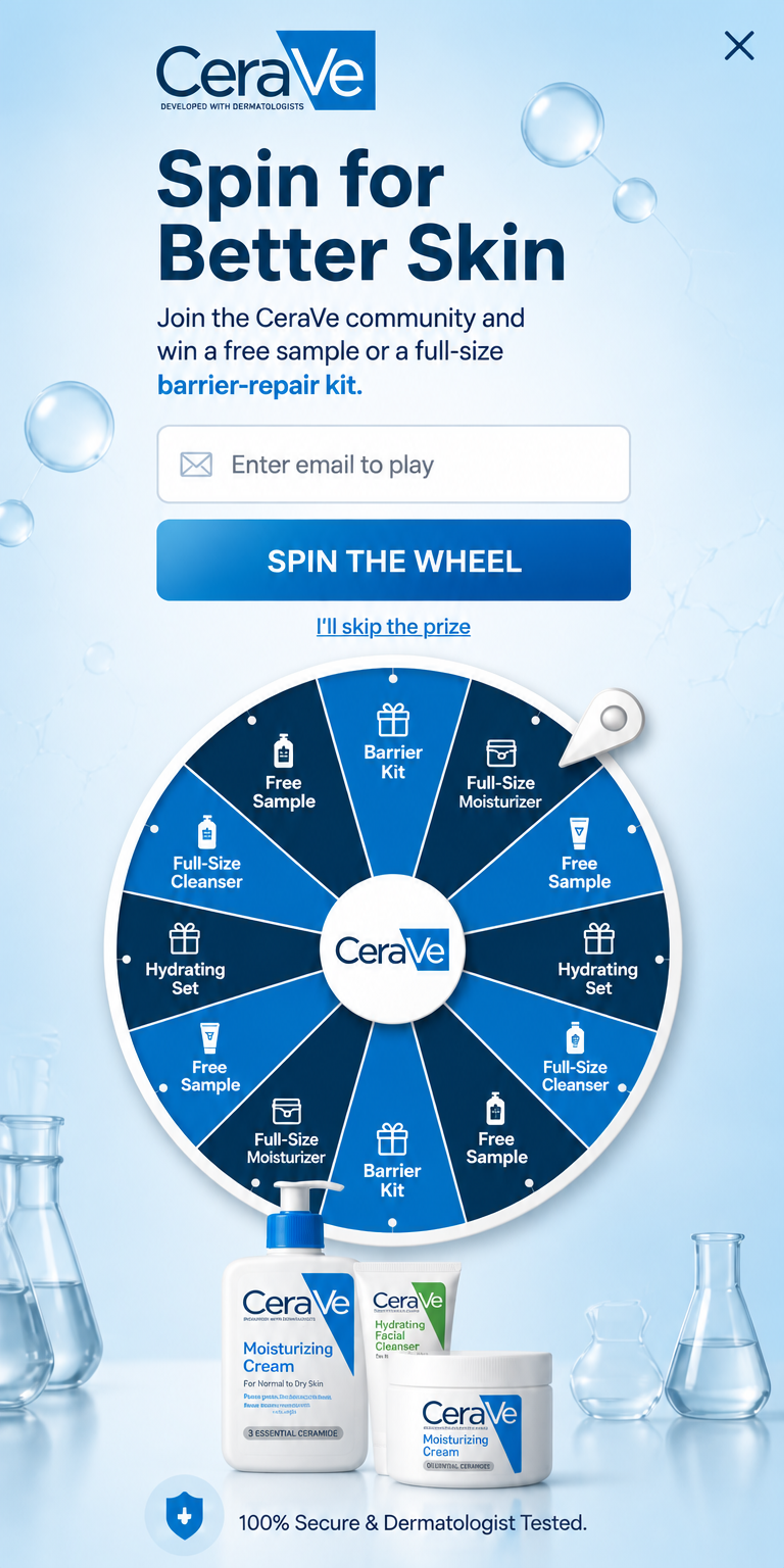
No discount at all: new visitors spin for a free sample or a full-size barrier-repair kit. Samples cost little and get the product into the shopper's hands, which suits brands that don't want to train customers to wait for codes. See this popup
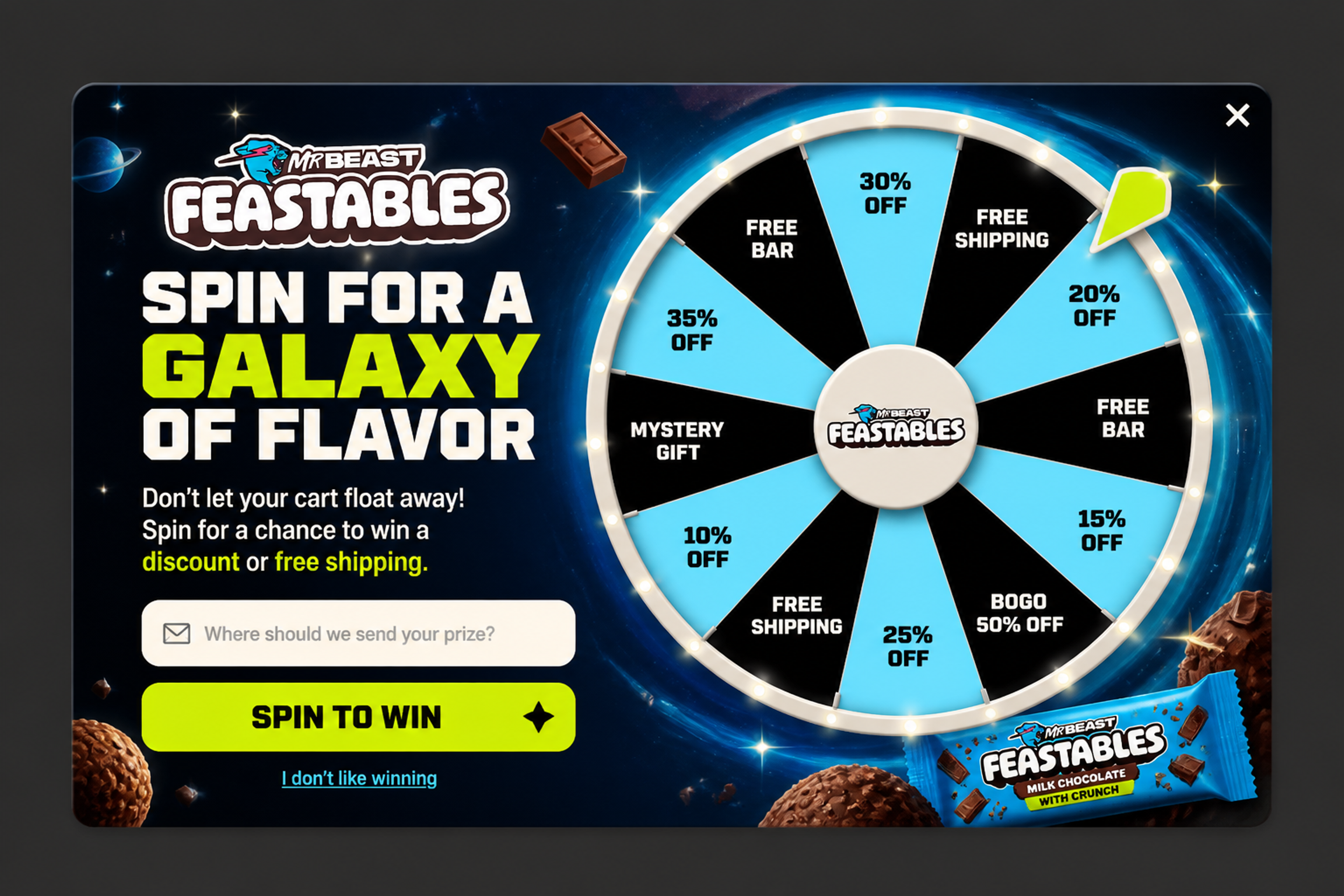
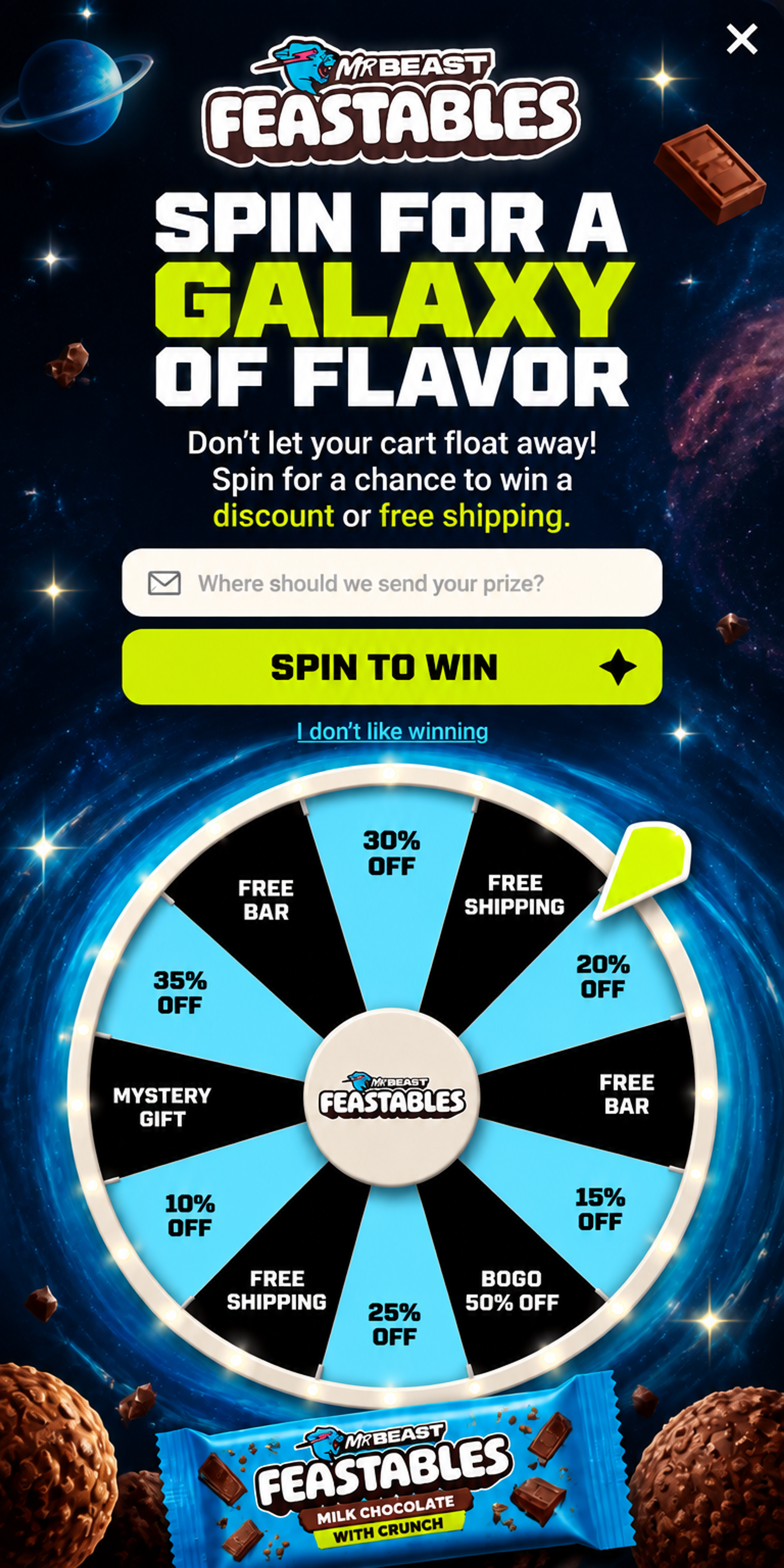
A cart-saver wheel: "Don't let your cart float away! Spin for a chance to win a discount or free shipping." It targets shoppers who already have items in the cart, so the prize helps close an order that has already started. See this popup
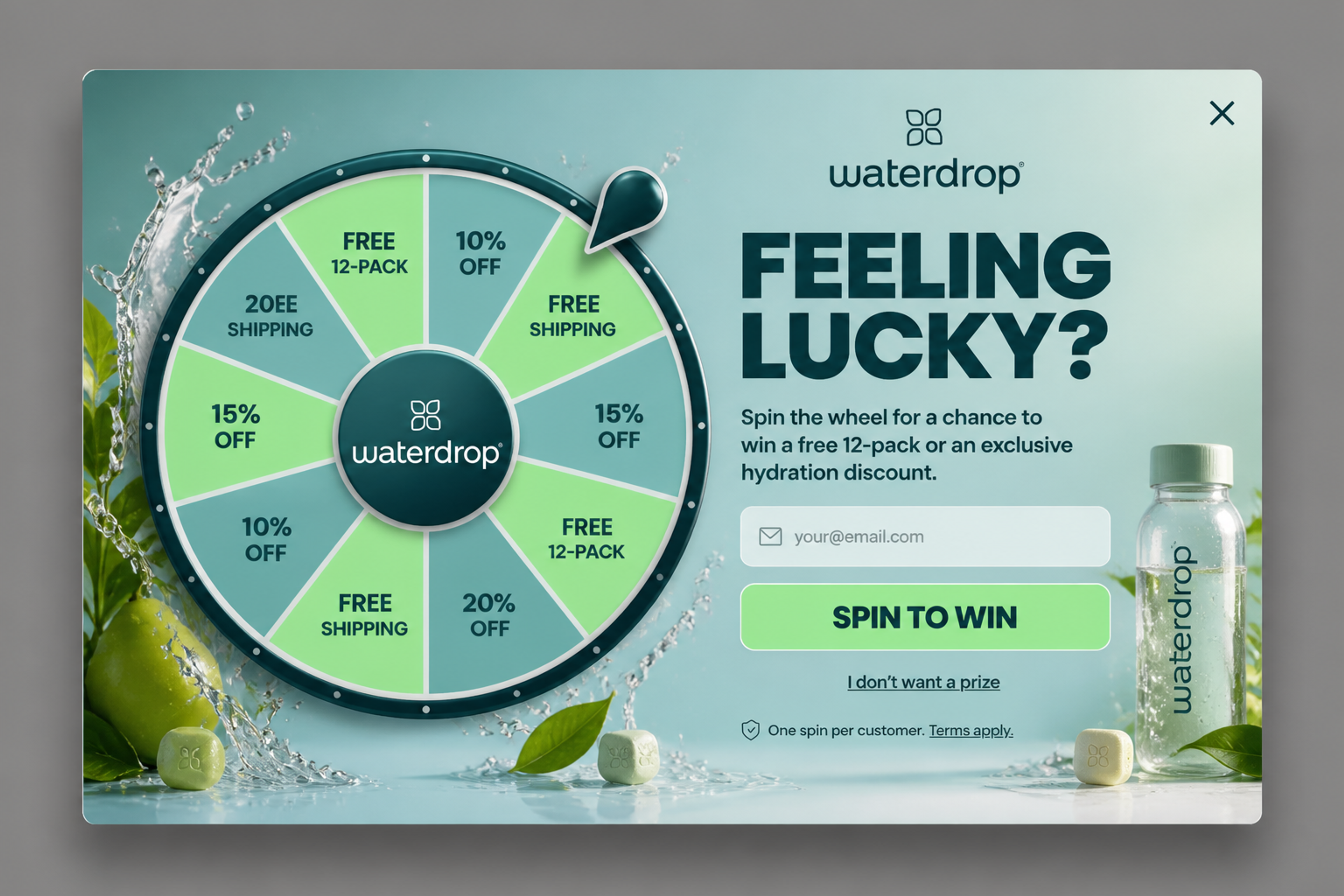
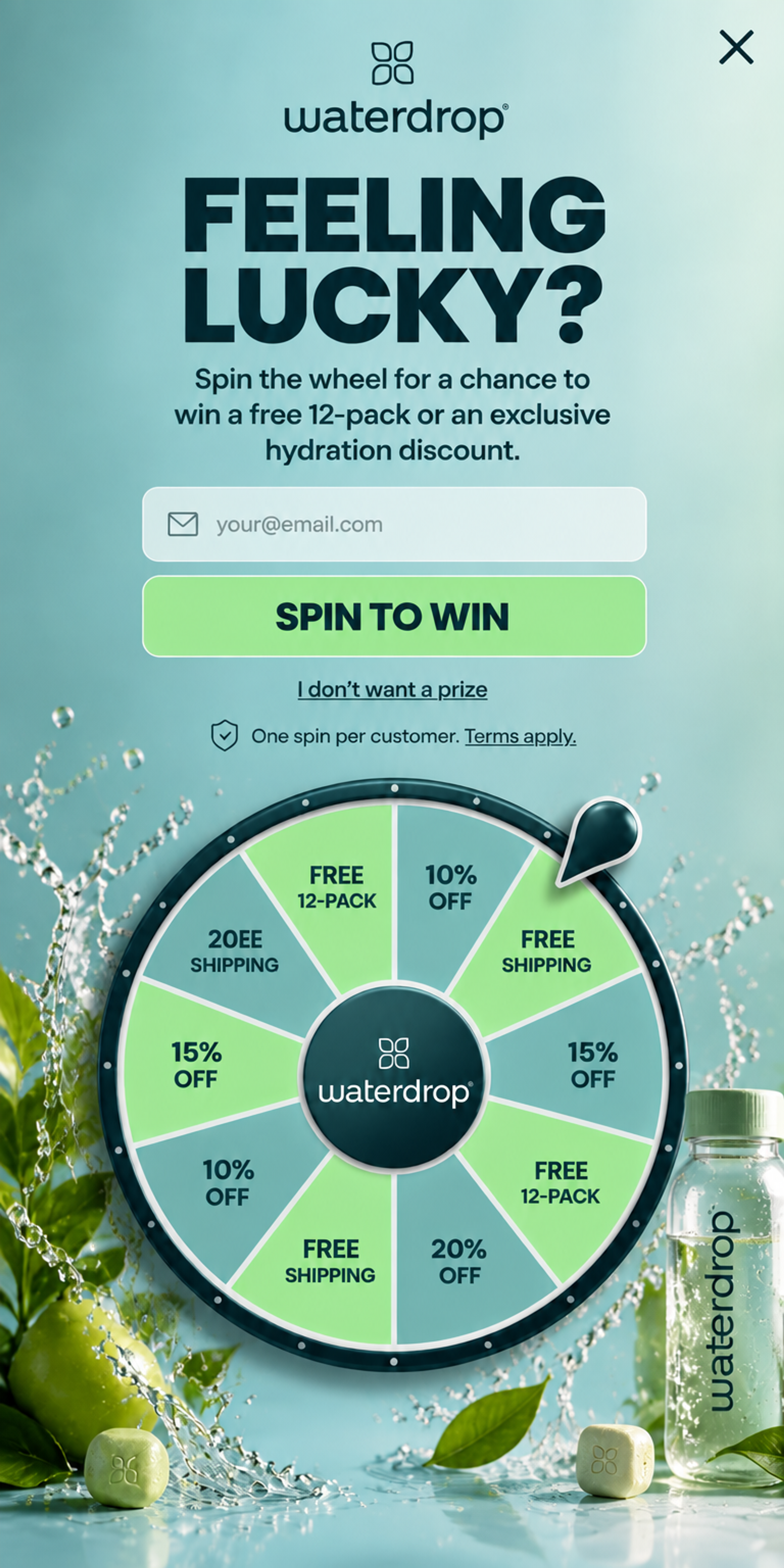
A chance to win a free 12-pack or a hydration discount. One big product prize makes the wheel exciting; give it a small weight and let the discount be the common win. See this popup
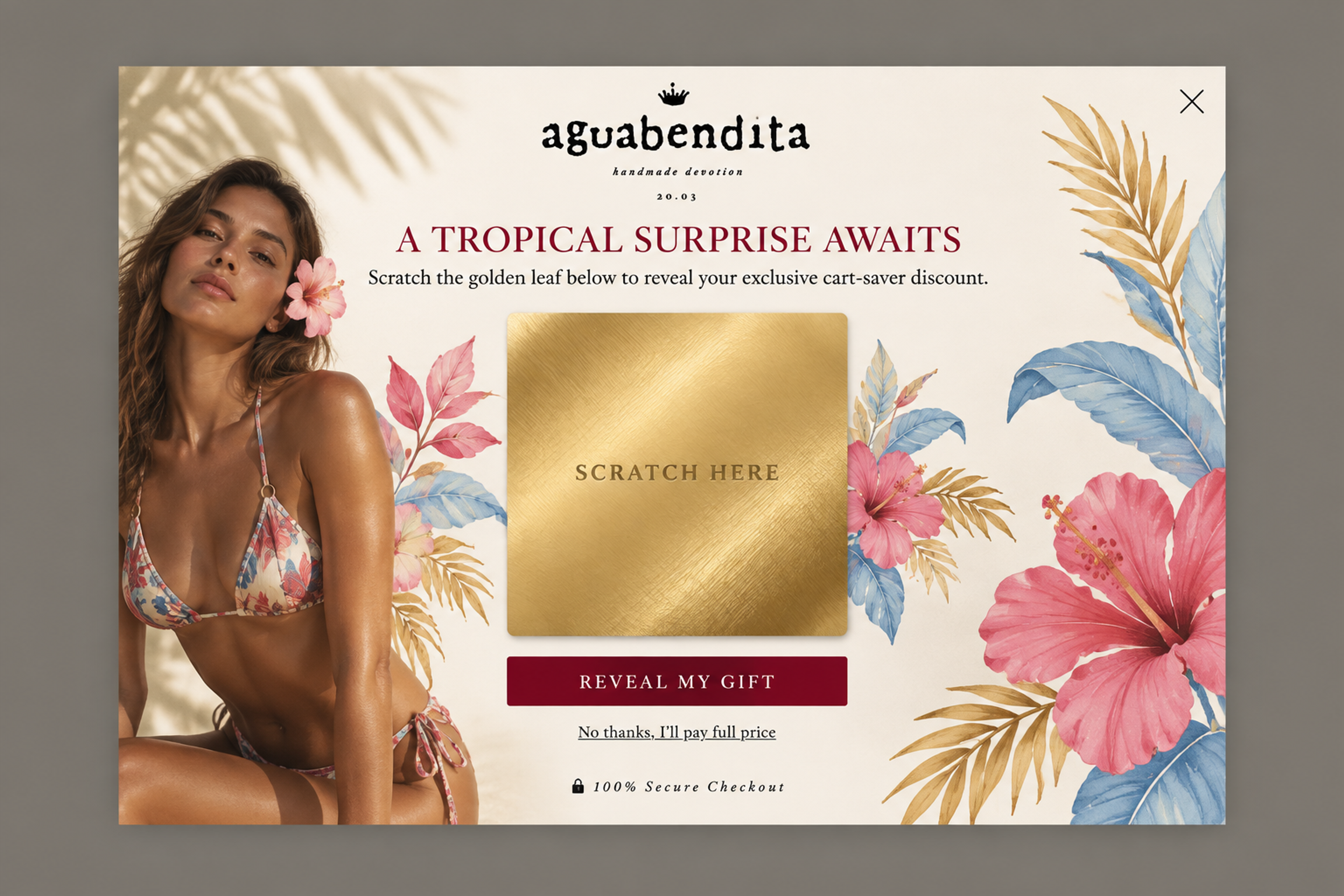
An exit-intent cart saver: "A tropical surprise awaits. Scratch the golden leaf below to reveal your exclusive cart-saver discount." The email field comes after the scratch, when the visitor already wants the code. See this popup
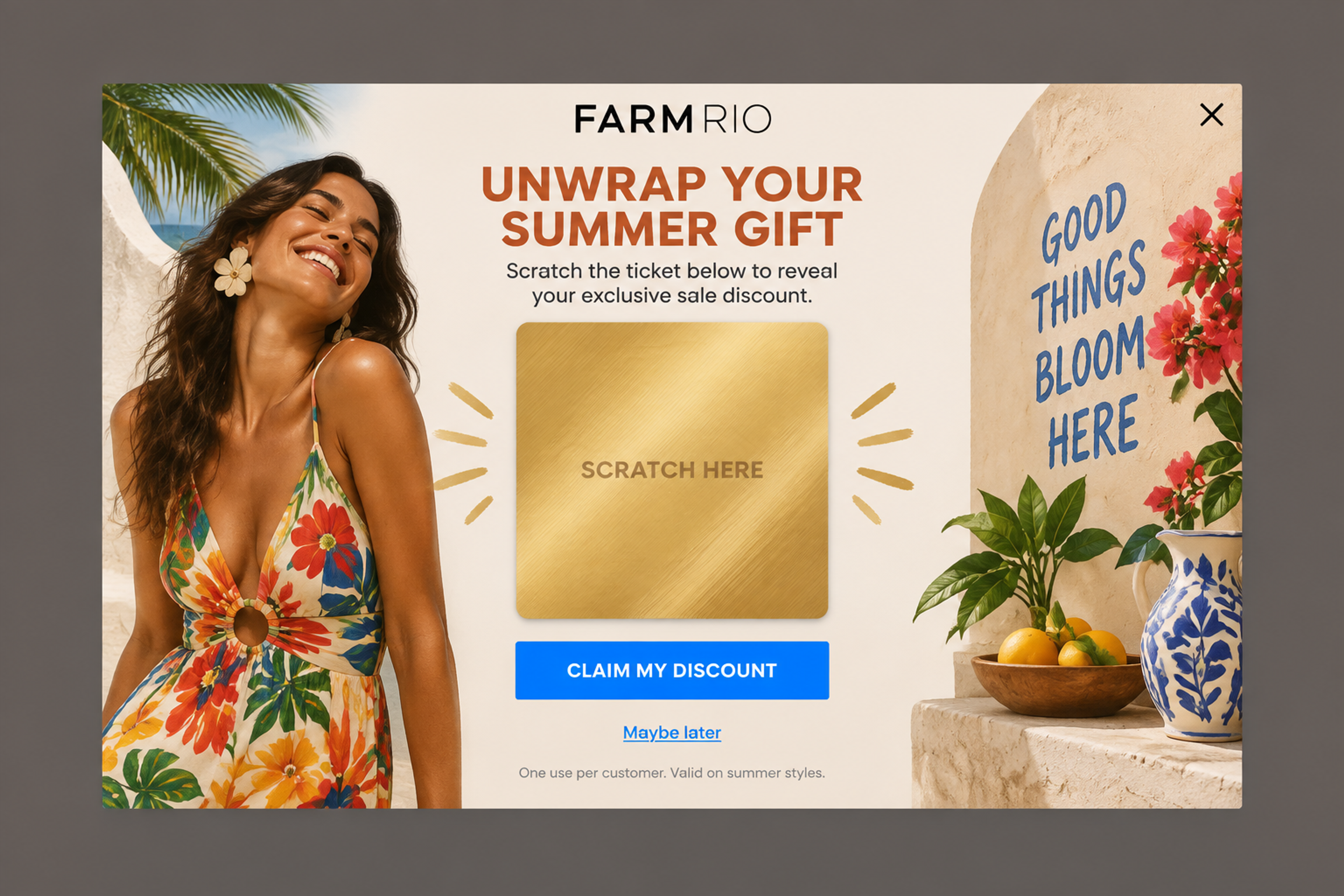
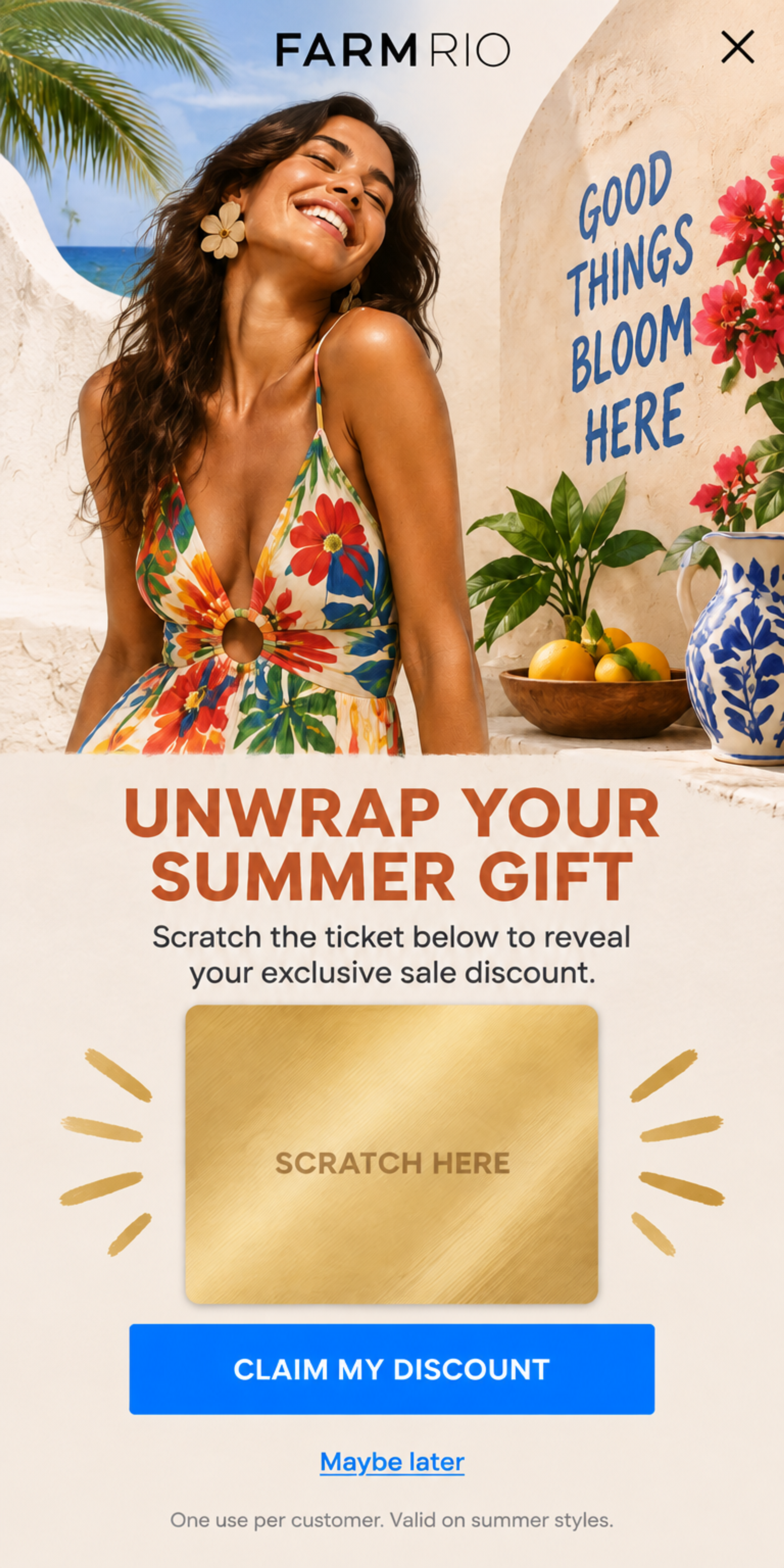
A summer sale reveal: scratch a gold ticket to find the sale discount. The trust line ("One use per customer. Valid on summer styles.") states the limits before the visitor plays. See this popup
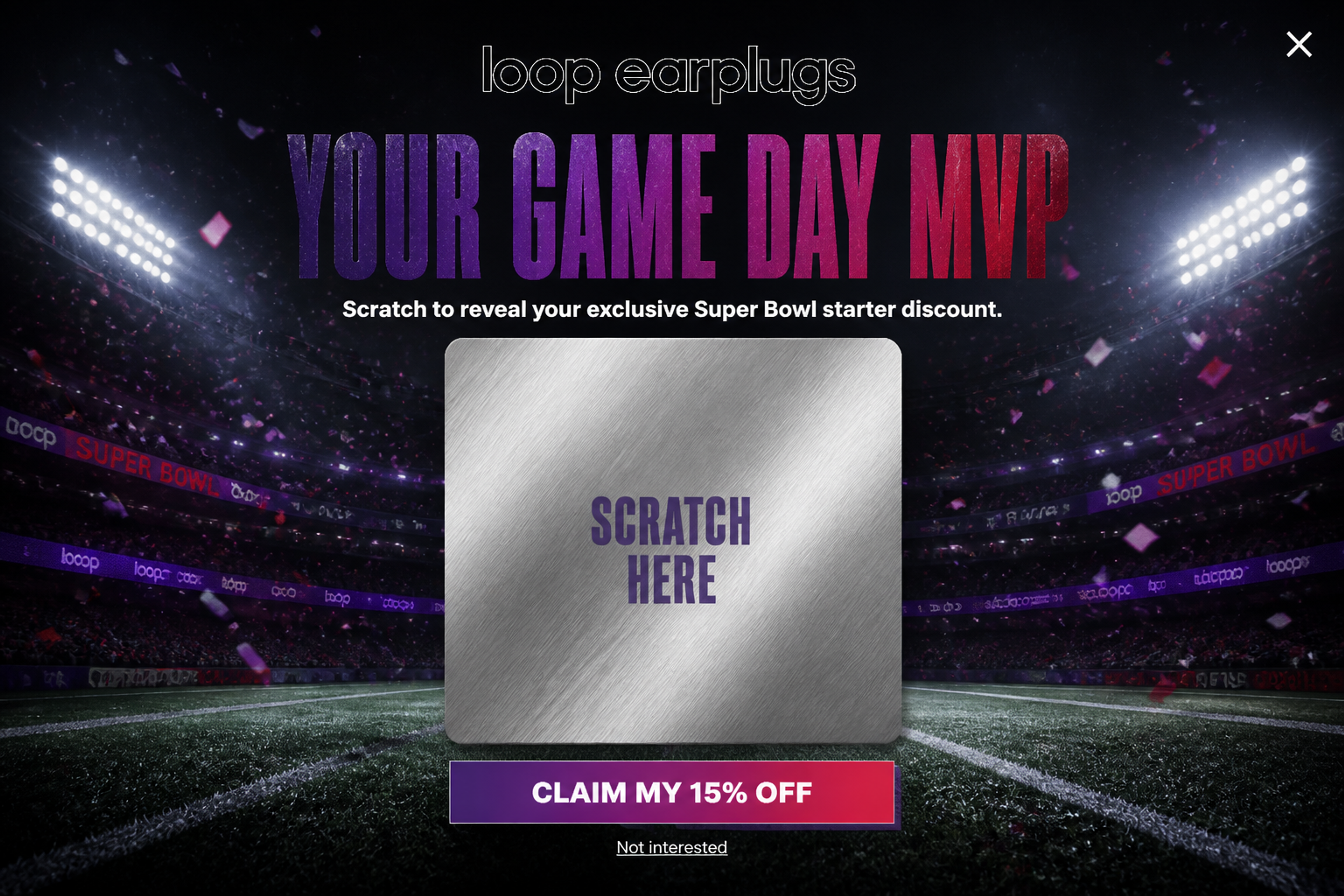
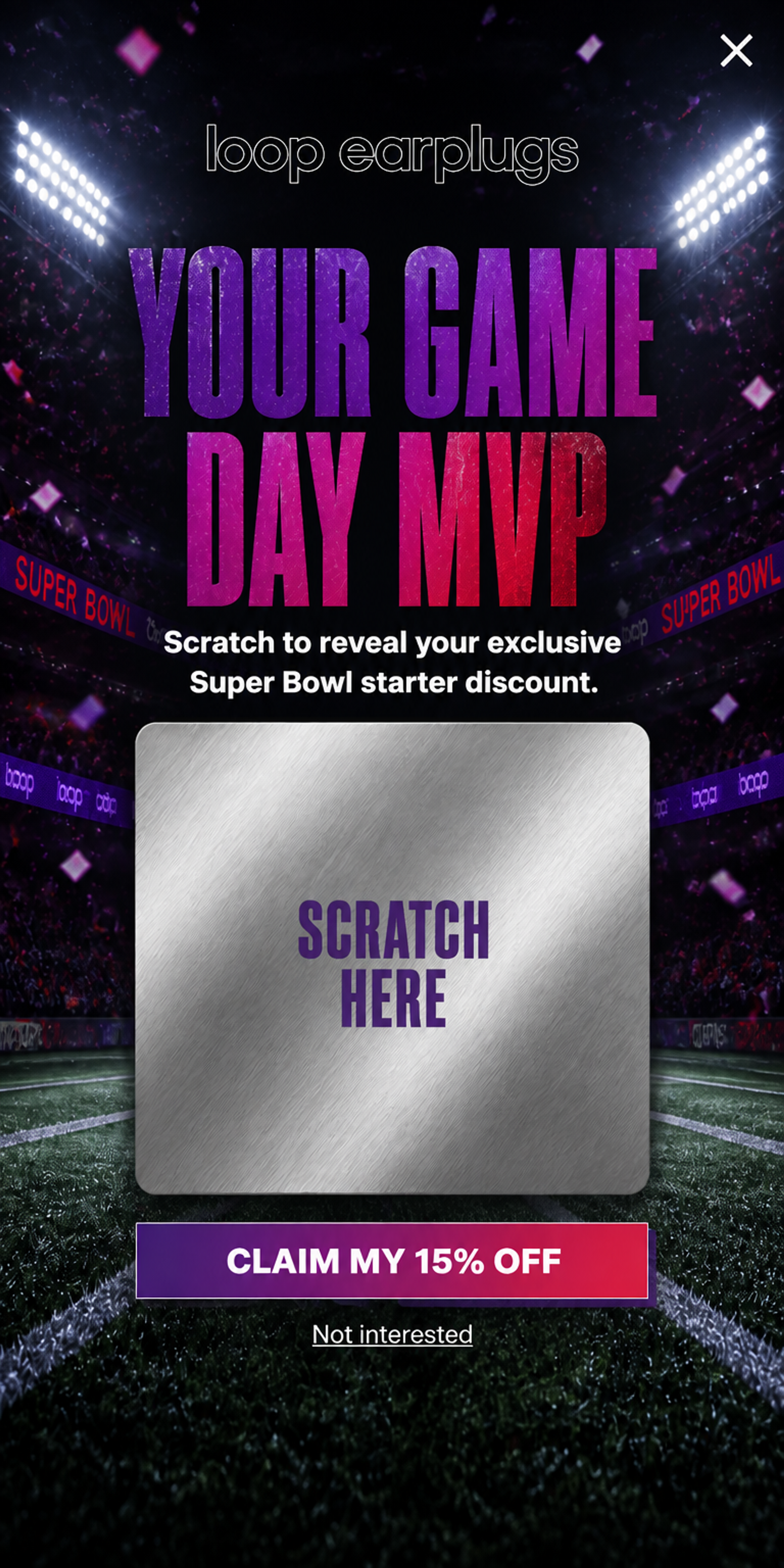
A fullscreen scratch card for new visitors, themed around the Super Bowl, with 15% off behind the foil. Tying the game to a date people already care about gives the offer a natural end. See this popup
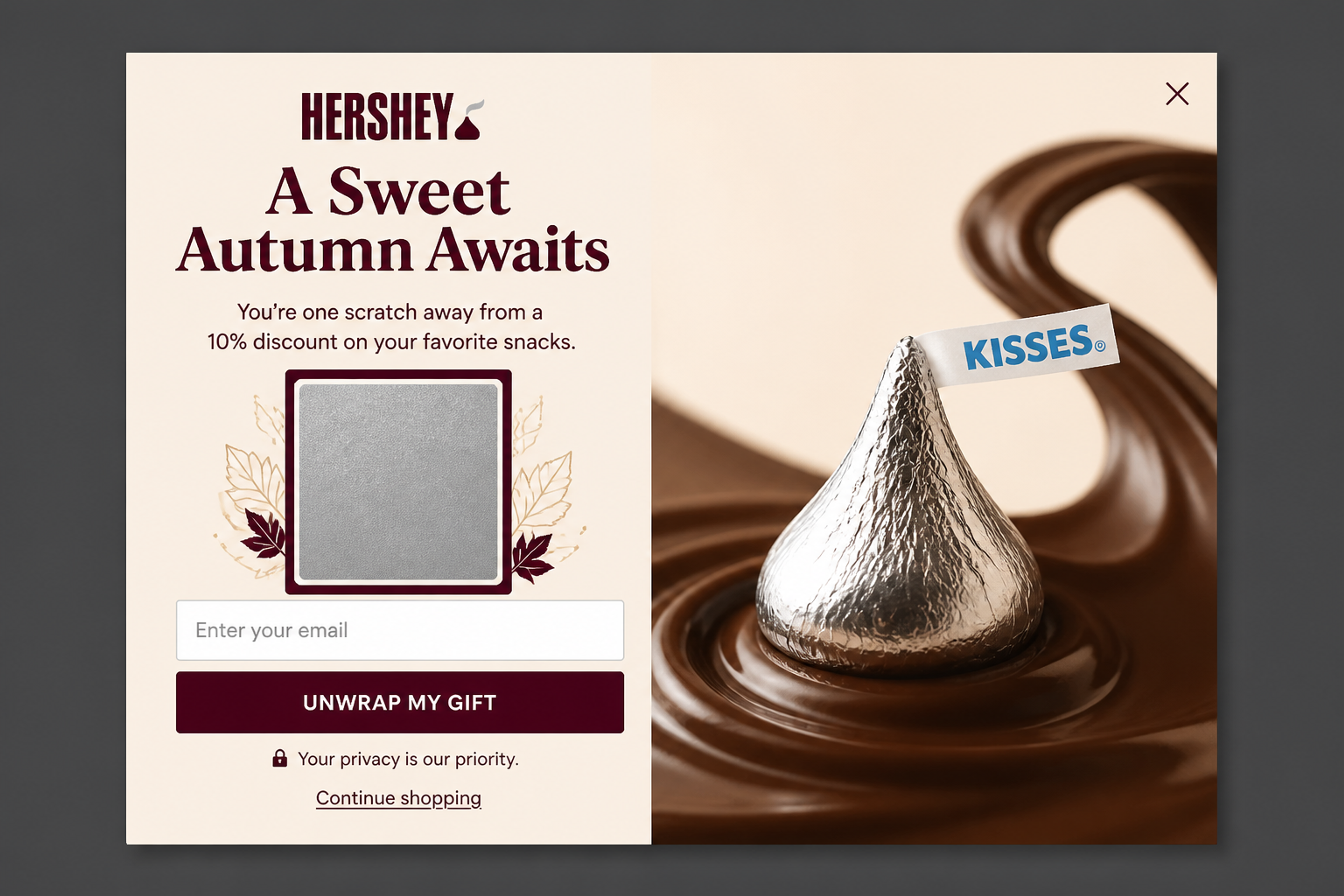
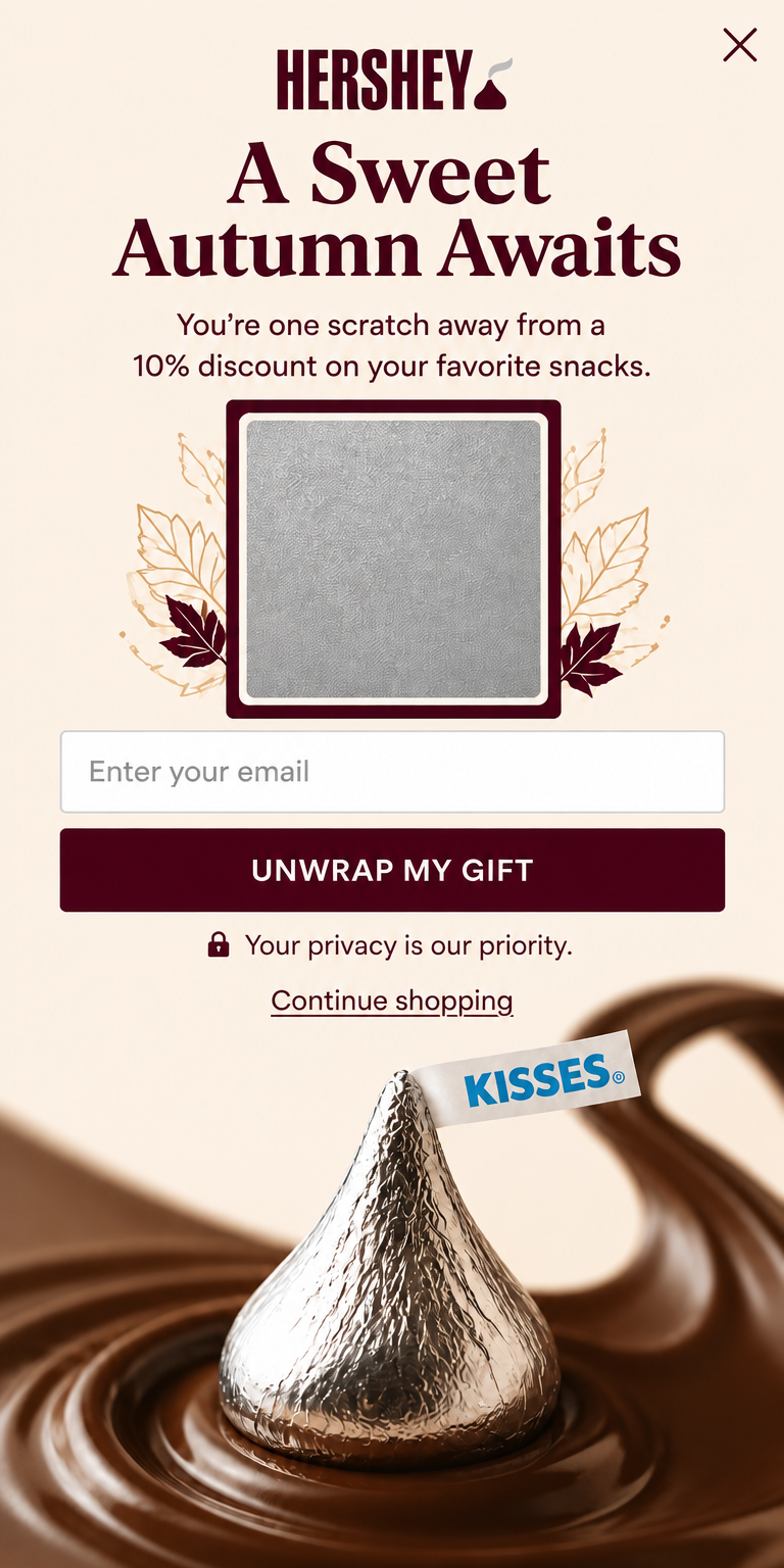
"You're one scratch away from a 10% discount." A clean layout with one product photo shows that a gamified popup doesn't have to be loud. The headline says what the prize is, so the scratch is about the fun, not the guesswork. See this popup
Browse more: spin-to-win popups and scratch card popups in the Popup Library.
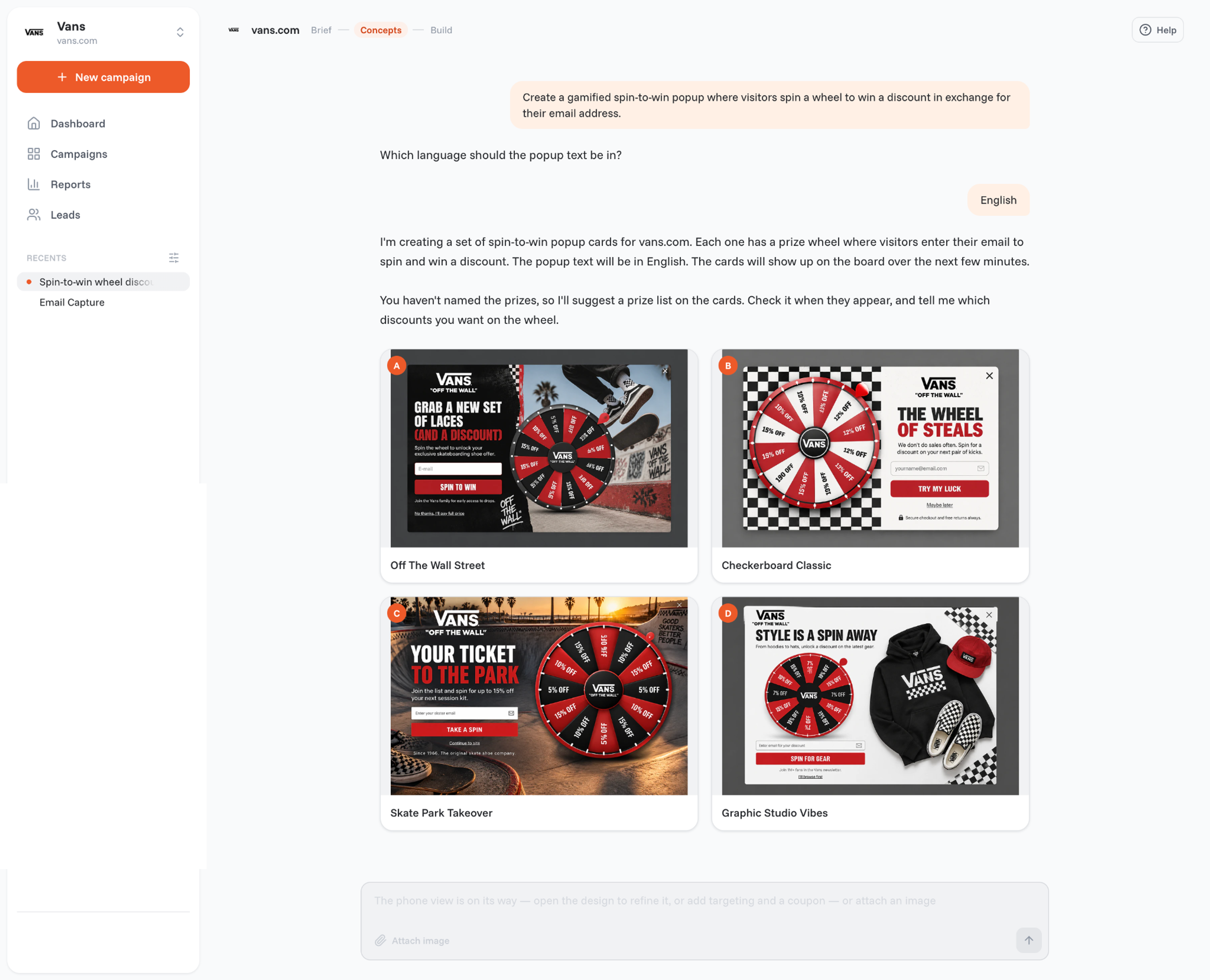
You build it by describing it. Write one sentence, for example:
"Create a gamified spin-to-win popup where visitors spin a wheel to win a discount in exchange for their email address."
From there, the agent:
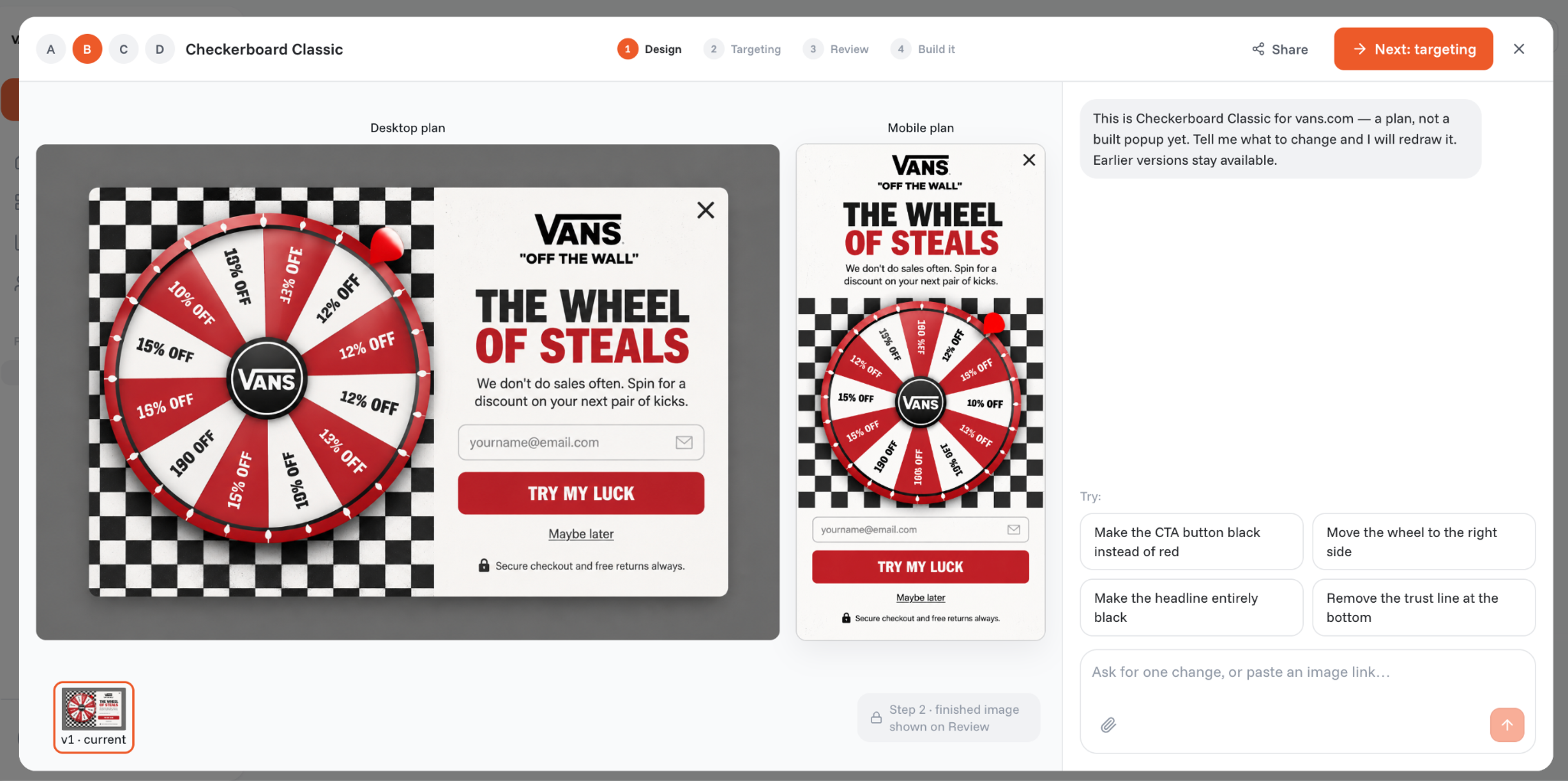
It doesn't stop at publish. You can A/B test the prizes, the copy, or a scratch card against a wheel, and run a holdout test to see how much the popup adds compared with no popup.
If you're comparing dedicated wheel tools, see our list of spin-to-win plugins for WordPress and how OptiMonk compares with Wheelio.
For more ways to use games in your store, read about gamification in ecommerce or see the gamification use case.
A gamified popup is a popup with a small game inside, usually a spin-to-win wheel or a scratch card. The visitor enters an email to play and wins a prize, such as a discount or free shipping. It's also called popup gamification.
In our data, yes: lucky wheels have a 13.23% average conversion rate, higher than the other email popup types we measured (popup statistics). The result still depends on your prizes and targeting, so A/B test a wheel against your current popup.
Three to six different prizes is enough. Repeat them around the wheel so it has more slices, and make the cheapest prize the most likely.
Yes. The visitor has already given you an email to play, so a losing slice feels unfair. Make the small prizes common and the big ones rare instead.
Yes. Install OptiMonk on your Shopify store, build the wheel, and create one fixed discount code per prize in the Shopify admin, then add the codes to the prizes.
Your first gamified popup is one sentence away. Describe the wheel or the scratch card and the prizes you want, and the agent designs it for your brand, with a separate mobile version and the targeting from your sentence.
Free to start. No credit card.


50 CTA button texts for online stores and popups, grouped by the shopper's moment, plus what makes a button worth clicking.
40 website welcome message examples for online stores, grouped by situation and industry, ready to copy into a welcome popup.
12 Christmas popup examples for online stores, from welcome offers and spin-to-win wheels to gift quizzes and last-chance countdowns.